


GCU Nursing Programs: BSN, MSN, DNP and Certificate Pathways
What Are GCU Nursing Programs?
GCU offers online(See disclaimer 1) nursing degree programs from pre-nursing through doctoral study. Whether you're beginning your nursing journey or are a nurse looking to advance your nursing education, you'll find pathways designed for licensure, leadership, education and advanced practice.
Depending on the program you choose, your curriculum may teach foundational clinical skills, such as patient assessments, or advanced nursing concepts in areas such as adult health. Programs at the graduate level offer opportunities to specialize in your chosen practice area. By committing to furthering your nursing education, you can help meet the ongoing need for qualified nurse clinicians.(See disclaimer 2)
New Online Undergraduate Nursing Student Scholarship
Save 5% on tuition when you start your program, if you qualify.(See disclaimer ¤)
What Nursing Specialties and Focus Areas Does GCU Offer?
The nursing field offers diversity in careers, with pathways available in clinical care, nursing leadership, information technology, nursing education and beyond. We offer numerous nursing programs aligned with the wide range of career pathways. Reflect on your professional interests when choosing an area of study that aligns with your career goals.
Nurse practitioners (NPs) work with greater autonomy and a broader scope of practice than registered nurses (RNs). With GCU’s nursing programs for future NPs, you can choose to specialize in adult-gerontology acute care, psychiatric mental health or family practice.(See disclaimer 3)
Advanced practice registered nurses (APRNs) can take their education a step further by pursuing numerous emphasis options with curriculum focusing on advanced concepts in clinical care, from patient assessments to pharmacology, as well as nursing leadership at the bedside.
Nurse leaders focus on performance and quality improvement, organizational leadership and healthcare financial management. Prepare to make an impact beyond the bedside, with a focus on organizational improvement.
Healthcare administration involves strategic planning, policy development and operational efficiency to support nursing teams. Explore ways of optimizing patient care while supporting organizational goals.
Nurse educators have a passion for teaching others about the field of nursing science. Nursing education emphasis offers opportunities for applied practice with instructional methods and the integration of technology into the teaching environment.
The health informatics field integrates information technology into nursing practice, which can help optimize patient outcomes, identify problem areas and improve operational efficiency. Pursue your passion for technology and explore how it can transform nursing.
The emphasis in quality and patient safety program allows you to focus on how to optimize the delivery of patient care to improve both patient outcomes and safety. Study core concepts in change management, translational research and healthcare project management.
Public health nursing impacts the health and wellness of an entire community. Public health nursing emphasis programs explores applied skills in epidemiology, translational research and population-based nursing interventions.
If you aren’t yet a nurse, explore general GCU nursing degrees that can lead to licensure, including our traditional Bachelor of Science in Nursing and our accelerated BSN. We emphasize evidence-based practices and sound clinical judgment, with a practice-ready focus for future nurses.
GCU Nursing Programs By Degree Level
Online Associate of Science in Pre-Nursing
If you’re new to nursing and hope to pursue your BSN, you can gain a foundation for nursing education by first completing your Associate of Science in Pre-Nursing. This will provide you with a framework of general education and science prerequisites, including courses in human development, nutrition and human anatomy.
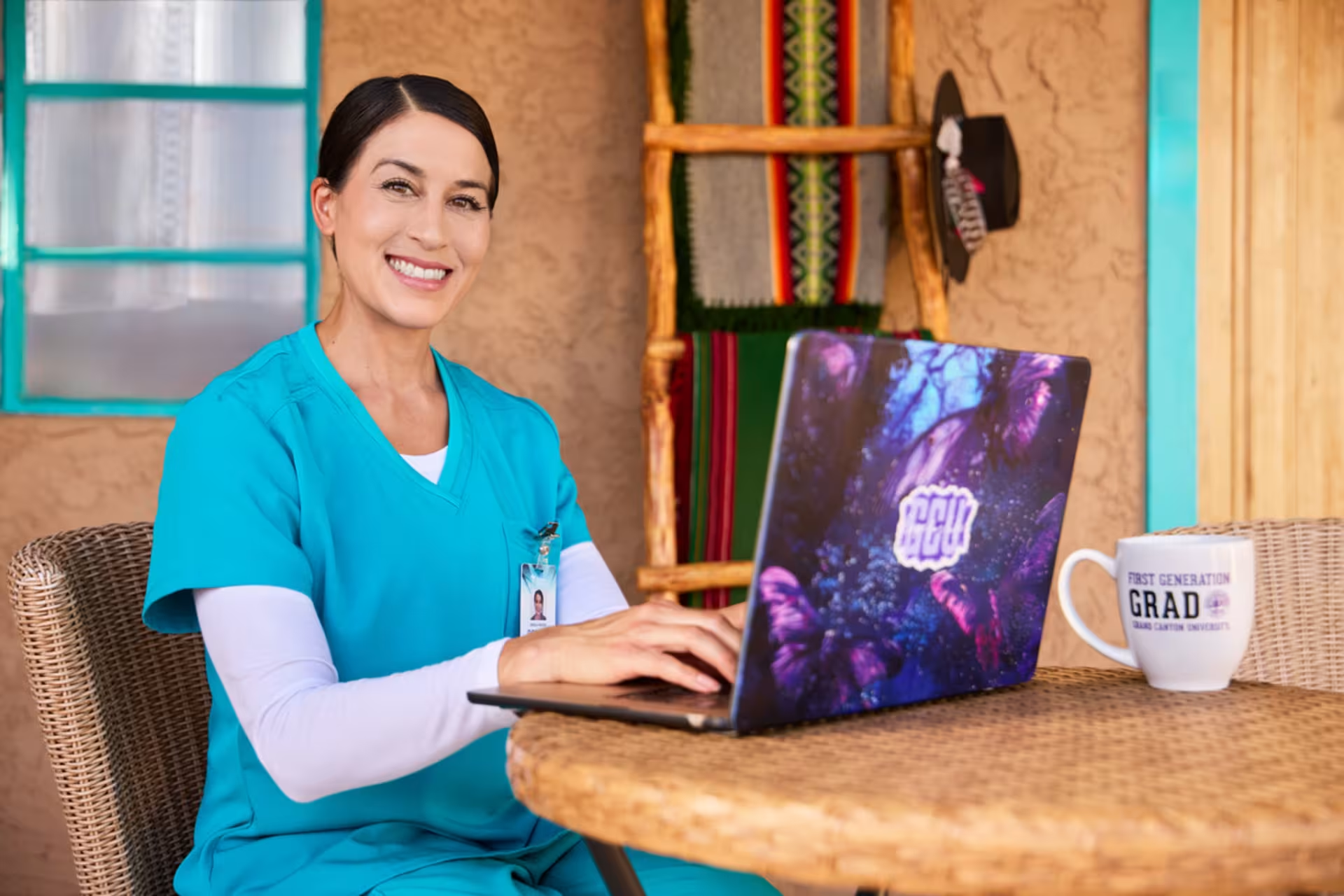
Undergraduate Nursing Degrees: BSN and RN-to-BSN Pathways
Our undergraduate nursing degrees can be ideal for first-time college students, career changers and active RNs. Prepare to take the licensure exam or advance your education with theory coursework and immersive clinical experiences or practicum.
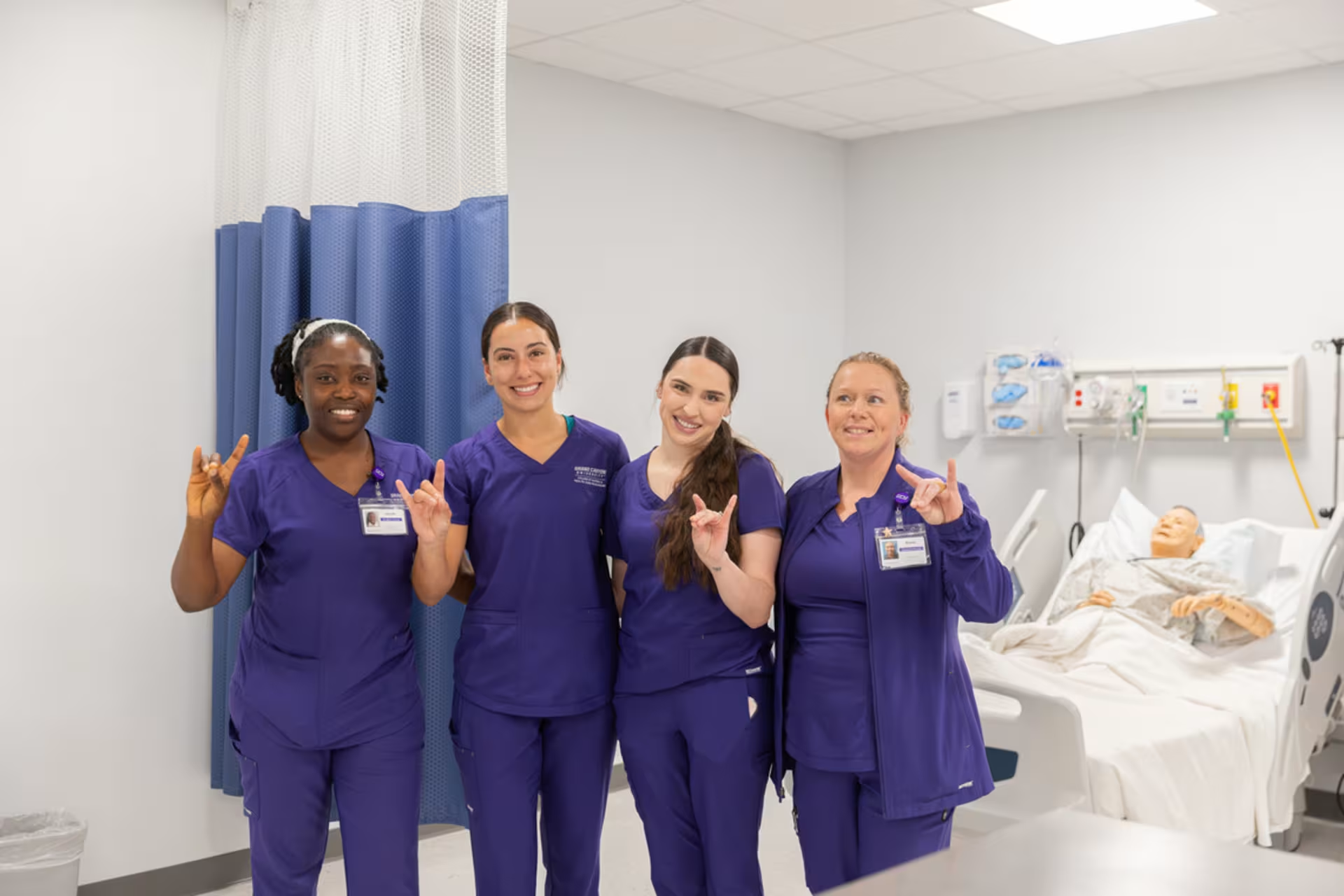
Master's Nursing Degrees: MSN Specialties and Pathways
Take your nursing education further and sharpen your clinical skills with a master’s degree in nursing specialties. GCU offers multiple MSN pathways across advanced practice, leadership, education, informatics, public health and other focus areas.

Doctoral Nursing Degrees: Doctor of Nursing Practice Program
Pursue the highest level of academic achievement in the nursing field by enrolling in a doctoral degree. Your Doctor of Nursing Practice (DNP) degree will teach you advanced concepts in clinical care, helping you make an impact as a nurse leader who prioritizes evidence-based practices and patients’ best interests.
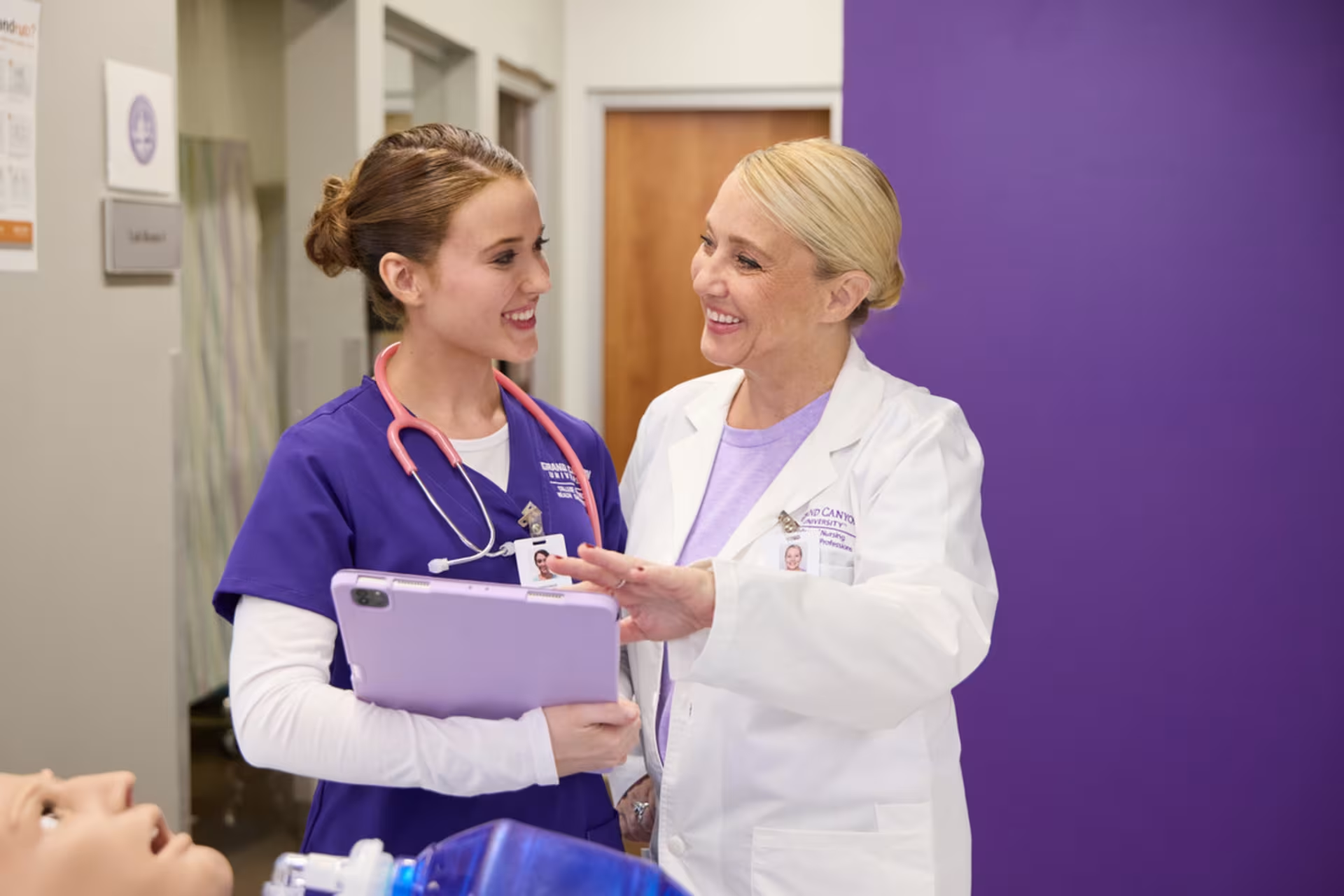
Post-Master’s Nursing Certificate Programs
Expand your nursing credentials and focus your studies on a specialized area by completing GCU’s nursing certificates. These non-degree programs are designed for experienced clinicians who already hold an MSN. They can be an ideal choice for those who wish to transition to a new practice area or deepen their expertise in their current specialty without completing another full degree.

Browse All GCU Nursing Degrees and Certificates
18 Matching Degrees





Which GCU Nursing Program Is Right for Your Experience Level?
Review the table below to help gain a better understanding of which pathway may be best for you. Select a nursing program based on your career goals and current or intended nursing specialty area.
Find Your Path in Nursing
Answer a few quick questions and we'll help point you toward nursing programs that match your goals and learning style. Results are meant to guide your search, not guarantee program fit or admission.
What Do GCU Nursing Students Say About Their Experience?

"If I were describing GCU’s nursing degree to somebody interested in becoming a nurse, I would say that it was a lot of hard work, but it was worth it. GCU’s BSN program is fast-paced, but I gained so many skills from it. I feel so much more knowledgeable now than I did when I entered the program."
"If I were describing GCU’s nursing degree to somebody interested in becoming a nurse, I would say that it was a lot of hard work, but it was worth it. GCU’s BSN program is fast-paced, but I gained so many skills from it. I feel so much more knowledgeable now than I did when I entered the program."
What Can You Do With a Nursing Degree From GCU?
Pursue or explore expanding your nursing career with GCU’s nursing degree programs. If you aren’t yet a nurse, you can prepare for licensure with one of our flexible BSN pathways. Alternatively, study advanced competencies in clinical practice, nursing leadership or nursing education to look beyond entry-level careers. From baccalaureate to master’s to doctoral levels, GCU’s programs support your nursing career at every stage.
Grand Canyon University nursing degree graduates may go on to pursue roles as:
Registered nurses
Provide evidence-based nursing care to patients recovering from illness, surgery or injury
Nurse practitioners
Step into an advanced practice role and serve as a nurse leader while continuing to provide clinical care
Postsecondary nursing instructors
Educate the next generation of nurses by teaching foundational nursing skills and concepts
Number of job openings estimated for registered nurses from 2025 to 2035(See disclaimer 4)
Median annual wage for registered nurses as of May 2025(See disclaimer 5)
Are GCU Nursing Programs Online or on Campus?
GCU offers both on-campus and online(See disclaimer 1 )nursing programs, allowing you to choose the learning format that best fits your schedule, career goals and program requirements. Many nursing courses can be completed online,(See disclaimer 1) while hands-on learning experiences, such as labs, simulations, clinical rotations or practicum experiences, are completed in person as required by the program.

Frequently Asked Questions About GCU Nursing Programs
Explore our answers to some of the most frequently asked questions about the Grand Canyon University nursing degree programs.
What is the difference between BSN, MSN and DNP nursing degrees?
Do GCU nursing programs help prepare students for the NCLEX-RN(See disclaimer ®)?
Does GCU offer nursing pathways for different experience levels?
Are clinical experiences required in GCU nursing programs?
Can transfer credits apply toward a nursing degree?
What skills can students develop in a nursing program?
Are GCU nursing programs designed for working professionals?
What Can You Expect as a GCU Nursing Student?
The College of Nursing and Health Care Professions students explore foundational nursing concepts through coursework, skills development and applied learning experiences. Depending on your program, you may complete online coursework, labs and clinical experiences designed to support your academic and professional growth.
Some key components you can expect throughout your nursing journey include:
Coursework and topics
Coursework varies by program but may cover topics such as patient care, health assessment, pharmacology, pathophysiology, evidence-based practice, leadership and healthcare ethics.
Skills you can build
As you progress through your program, you can build competencies in clinical judgment, communication, critical thinking, teamwork and professional decision-making for nursing practice.
Online learning format
Many nursing programs include convenient online coursework designed to fit your schedule while maintaining academic engagement. Depending on the program, online study may be combined with required in-person labs, simulations or clinical experiences.
Field or clinical experiences
Many nursing programs include supervised clinical experiences, labs or simulations that allow you to apply classroom concepts in healthcare settings. As a private Christian university, GCU integrates a Christian worldview throughout the nursing curriculum.
Student support resources
As a GCU nursing student, you'll have access to resources such as the Student Success Center, library services, technical support and guidance from knowledgeable faculty to help support you throughout your educational journey.
Accreditation and program quality
GCU has been institutionally accredited by the Higher Learning Commission since 1968. The College of Nursing and Health Care Professions shares the university’s commitment to upholding the principles and standards established by our accrediting bodies.
Understand the Cost of a GCU Nursing Degree
GCU believes that quality higher education should be accessible to all. We’re committed to keeping tuition for our academic programs competitive while providing resources to help you understand the cost of your investment. Review tuition information and potential scholarship and financial aid opportunities.
Discover Your Financial Options
Connect with a university counselor to learn more about tuition, cost-planning resources and available options.
Ways To Save
Your education is an important financial investment, and there are several ways to help manage costs while earning your degree. GCU’s university counselors are available to help you explore available options and provide personalized guidance on your estimated cost of attendance.
Complete the Free Application for Federal Student Aid (FAFSA) annually to determine eligibility for federal grants and student loans. Since some aid is awarded on a first‑come, first‑served basis, GCU recommends submitting the FAFSA as early as possible after Oct. 1 to maximize funding opportunities.
If you’ve earned college credits from another institution, you may be able to complete your degree sooner at GCU by transferring those credits. Submit the Lopes Unofficial Credit Evaluation form, then connect with a university counselor who can provide you with personalized guidance.
You may be able to reduce your college costs by applying for GCU’s on-campus or online student scholarships. We invite you to explore available institutional scholarships and determine which opportunities you may be eligible for. GCU also encourages students to seek out third‑party scholarships and grants.
What Are the Admission Requirements for GCU Nursing Programs?
GCU has streamlined the process of applying for admission to the university. Our school does not require a personal statement or essay and there is no application fee. Specific requirements can vary, depending on the degree or program. Some programs may require prerequisite courses. Some students may be eligible to transfer credits. Your university counselor will help you navigate the process of applying.

You can apply to a degree program at GCU in just three simple steps. Your university counselor is standing by to assist you with any questions about the application process.
It starts with selecting the program that aligns with your goals from one of GCU's 380+ academic programs — from undergraduate degrees to post-master’s certificate programs to doctoral degrees.
Pick your program
Explore our on-campus, online or evening cohort options under the Degree Programs page to find the right program for you.
Complete our online application
Your university counselor will direct you to the online application. Fill in all required information and submit the form.
Submit supporting documents
Submit your official transcripts and any relevant test scores, and confirm with your university counselor that all forms for your desired program are submitted.
Explore More on Nursing



Whether you're starting or advancing your nursing education, explore GCU's nursing programs to compare degree pathways, specialties and learning formats that align with your goals.
(See disclaimer ¤) MOU 10524: The New Undergraduate Nursing Student Scholarship is only valid for those applicants who submit a complete application, meet all requirements for acceptance and start their program. If you enroll in the RN to Bachelor of Science in Nursing or a Bridge to Master of Science in Nursing pathway, we will award you 5% off the tuition per course for your program. Scholarship applies to the undergraduate courses in the Bridge to Master of Science in Nursing. This scholarship will be applied at the same time the tuition charges occur. This scholarship cannot be used in conjunction with any other GCU scholarship. This scholarship will be applied toward your tuition only, and you will not receive funds in excess of your charges.
Clinical, practicum and immersion hours completed locally.
- National Center for Health Workforce Analysis. (2025, December). Nurse Workforce Projections, 2023-2038. Health Resources and Services Administration. Retrieved June 2026.
Clinical, practicum and immersion hours completed locally. Requires on-campus experiences.
- Data shown is effective August 2026, which can be found here: U.S. Bureau of Labor Statistics, Occupational Outlook Handbook, Registered Nurses, retrieved September 2026.
- The earnings referenced were reported by the U.S. Bureau of Labor Statistics (BLS), Registered Nurses, as of May 2025, retrieved September 2026. BLS calculates the median using salaries of workers nationwide with varying levels of education and experience. It does not reflect the earnings of GCU graduates as registered nurses, nor does it reflect the earnings of workers in one city or region of the country or a typical entry-level salary. Median income is the statistical midpoint for the range of salaries in a specific occupation. It is very unlikely that a median salary will reflect an entry-level salary. It represents what you would earn if you were paid more money than half the workers in an occupation, and less than half the workers in an occupation. It may give you a basis to estimate what you might earn at some point if you enter this career. Grand Canyon University can make no guarantees on individual graduates’ salaries. Your employability will be determined by numerous factors over which GCU has no control, such as the employer the graduate chooses to apply to, the graduate’s experience level, individual characteristics, skills, etc. against a pool of candidates.
Approved and verified accurate by the Associate Vice President of GCU Marketing on Sept. 10, 2026.